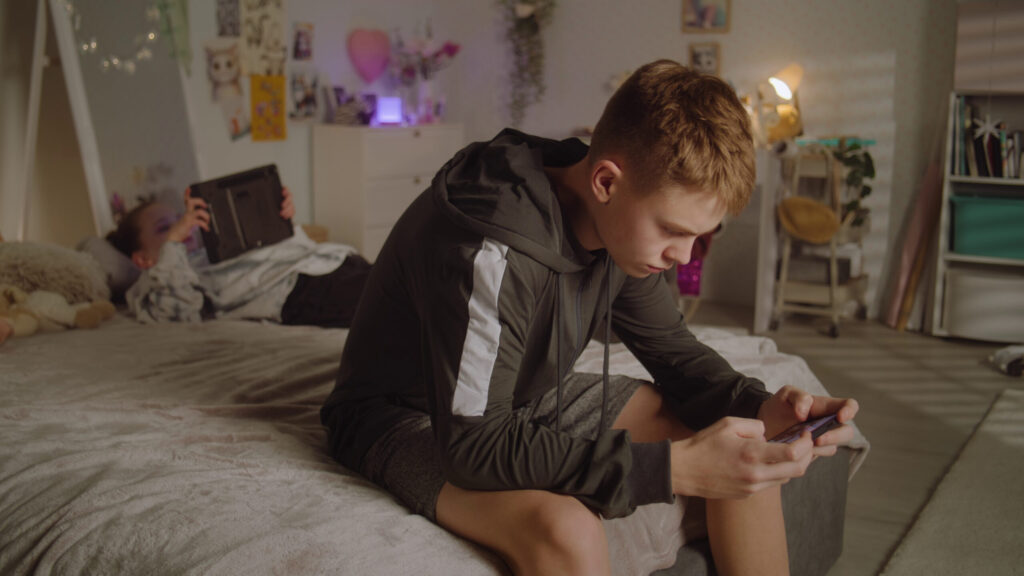
teen angst or…
Let’s face it: parenting a teenager in this digital age is a WHOLE NEW LEVEL OF CRAZY. If only we could raise our kids back in the 90’s, am I right?!
You want to trust them. You do trust them. You know they want you to trust them. But lately? Something feels off. And your gut hasn’t let you down before.
If you’re wondering whether it’s time to call in some backup ( me), here are 7 signs it might be worth having a PI quietly help you get the facts. No judgment, no drama, just real answers.
1. They’ve suddenly become ultra secretive.
We’re not talking typical teen “leave me alone” vibes – we’re talking they hide their phone when you walk into the room, deleted texts, password-protected everything (and they fight you when you say you need the passwords) and a phone they guard like it’s nuclear launch codes.
2. Their story doesn’t add up.
Out with friends? At the library? Except their location says otherwise (or it’s been turned off) and their “study group” looks suspiciously like a party crew. A personal favourite – taking a backpack to the mall when they don’t even carry a purse and there’s nothing in it when they leave the house. Been there, tracked that.
3. You’ve noticed mood swings that feel different.
Yes, hormones are real. But if their personality has flipped the switch completely, or they seem withdrawn, defensive, aggressive, or anxious, it might be more than just a bad day or week.
4. New “friends” you’ve never met are suddenly always around.
And something about them feels off. Maybe it’s the age difference, maybe it’s the vibe, maybe it’s your inner alarm bells screaming. Trust that.
5. They’ve started lying-or omitting a lot.
You’re finding out more from Snapchat/IG/Discord/etc or other parents than you are from your own kid. If they’re going out of their way to keep you in the dark, putting the blame on others (often the same person), there’s usually a reason.
6. Their grades have dropped or routines have changed drastically.
Missing curfew, skipping class, bullying others, sleeping all day, staying up all night? Changes like these can be signs of deeper issues – substance use, peer pressure, or risky behaviour.
7. You’ve caught them in something sketchy before.
Once the trust is broken, it’s tough to know what’s really happening. A PI can help you rebuild that foundation with actual facts – because guessing games suck when your kid’s safety is on the line.
Ethical Boundaries That Matter
Ethical boundaries are critical in any investigation involving minors.
A professional private investigator must operate within clear limits, including:
- Lawful observation only – no trespassing, coercion, or deception
- No interference with the teen’s activities or relationships
- No monitoring of private communications (texts, social media accounts, or devices)
- Minimal intrusion, with the child’s dignity and well-being kept front of mind
- Clear objectives established before any work begins
An ethical investigator will also refuse cases where:
- The intent is punitive, retaliatory, or controlling
- The request violates legal or ethical standards
- The investigation could cause unnecessary harm
Responsible investigative work prioritizes restraint, not escalation.
What Parents Should Understand Before Making This Decision
Before moving forward, parents should understand a few important realities:
- Surveillance does not provide context, intent, or emotional understanding – it provides observable facts only
- Information gathered may be difficult or upsetting, even when concerns are confirmed
- Not all concerns are validated by surveillance — and that outcome still matters
- An investigation is not a substitute for parenting, therapy, or legal guidance
- The goal is clarity, not certainty – and clarity can sometimes change the path forward
Most importantly, reaching out to a private investigator does not mean committing to an investigation. A confidential conversation can help determine whether this approach is appropriate – or whether another option would better serve the family.
So… Should You Hire a PI?
Situations involving teens and tweens require care, discretion, and sound judgment.
Any professional involvement should be guided by safety, legality, and the child’s best interests – not fear or impulse.
Because when it comes to protecting your kid, information is power.